Our VIA Journey

Updated: Mar 21
Writers: Steven (25-A4), Kaidon (25-I1), Isaiah (25-I4), Jakin (25-I5), Shao Kai (25-U3)
Designed by: Kaitlyn (25-U1) and Avelyn (25-A2)
Editor’s Note: The names of residents in this article have been changed to protect their privacy.
The first — and most difficult — step in starting a Values-In-Action (VIA) project is the ideation process. When we began planning our VIA project, the goal we had in mind was simple: contribute meaningfully to a cause we genuinely cared about. Our CCA mates cared about a wide variety of causes, and while that was admirable, it meant we struggled to agree on a single cause to pursue alongside the many other CCA initiatives already in place. The eventual decision we made struck some as a cop-out: serve the elderly in a nursing home. It seemed almost cliché. Yet, what we expected to be a straightforward volunteering experience became something far more reflective and personal for everyone involved.
During our three sessions, spread out across five weeks, we did more than just facilitate activities; we listened to the stories the elderly told of their youth, observed their daily struggles and victories, and gained insight into lives shaped by resilience and change. Some moments were uplifting, and others were saddening. But all of them left a lasting impression on us.

By the end of the programme, the residents we cared for and the stories we heard reshaped how we thought about ageing, service, and gratitude. We are honoured to take you through the stories.
Day 1
Nothing seemed out of the ordinary when we filed into the communal spaces of the residences at Ren Ci Nursing Home. In each living area, we were greeted with a group of residents seated at a long table, having their dinner. Some of the residences had a small balcony where edible plants were carefully tended to.

This serene setting, simple though it may have been, was uncharted territory for many of us. For a moment, we stood motionless, huddled around our bags as the staff attempted to get things going. But still the reluctance remained, for we were experiencing a strange bout of cognitive dissonance.
On one hand we were presented with this sight — the residents enjoying their dinner, happily and at ease — and on the other hand the popular assumptions about nursing homes — mere refuges for the elderly and infirm to live in limbo, isolated from their families due to unfortunate circumstances at home — clawed at our minds. So we veered towards the human and the tangible. As the residents turned their heads to meet our collective gaze and smiled, we smiled back and we connected instantly.
Most of the residents were sitting around the table. But we noticed one elderly woman sat apart from the group. Seated at the edge of a geriatric chair, “Anna” was poring over a Word Search puzzle — a decades-old routine that helped to alleviate the effects of her dementia.
We began the day’s work folding sheets of square paper into passable origami figures, and slowly, despite our broken Mandarin and confused attempts at sign language, Anna started to open up to us. Though her dementia occasionally affected her speech, she spoke with sincerity and heart of her youth. What we had anticipated to be mere paper-folding became a moment for support, empathy, and quiet reflection with her.
Anna was different then. She balanced career ambitions and family responsibilities, teaching herself English despite starting with almost nothing. Such grit and determination we found to be truly admirable.
We soon concluded our activities, and after bidding farewell to the residents, we left the nursing home contemplating the day’s revelations. The residents’ lives had been shaped by chance and hardships, some of which we could not even understand today, and yet they spoke of them openly and kindly as they welcomed us into their home.

To think that this was only the beginning of our VIA journey…
Day 2
If Day 1 was defined by tentative curiosity, then Day 2 unfolded with gentle familiarity. Slabs of pliant clay were placed upon the communal table, waiting to be moulded. Some seniors dove into the activity with surprising fervour, as though they were rediscovering a long-forgotten craft. Others approached it more gingerly, fatigued, but never fully giving up their willingness to try.

That day, “Elsie” carried a quiet weariness about her. Unlike the excited kneading of her neighbours, her movements were measured and deliberate. She moved despite her fatigue, flattening the clay with steady palms, watching intently as we demonstrated how slight indentations allowed separate pieces to hold fast to one another. Together, we shaped simple figurines: a snowman, a tree, flowers, a modest rainbow; all were meant to be three-dimensional figures that would stand on their own. In reality, however, they were laughable. Save for one stubborn snowman, our trees and flowers all collapsed into flat figures against the wooden table. We laughed quietly at our “architectural compromise”. Yet, though Elsie’s hands trembled at times, her attention never wavered.
When our modest rainbow was completed, she examined it with quiet satisfaction, tracing its outline with her fingertips. She decided to keep it. Perhaps it was not its appearance that mattered, but the knowledge that she had made part of it herself. With that simple act of creation, the clay, once without form, became something genuinely luminous in her hands.

Day 3
On the third and final day, the clatter of mahjong tiles punctuated the air. For the residents, it was a familiar routine: the room was soon filled with exclamations of pong, chi and hu. As described by a staff member, it was truly a test of mental dexterity, strategy and nimbleness.
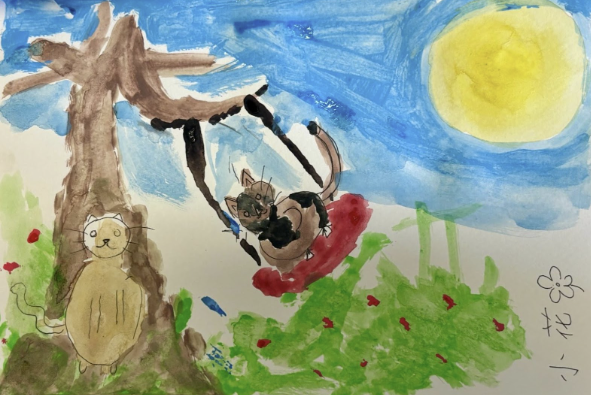
Some other residents were presented with acrylic paint and brushes. With each stroke of paint on paper, smiles spread across the elderly residents’ faces. Steadily, brushes of colour appeared on the paper, and by the end of the hour, many were admiring their scenes of trees and animals with satisfaction.
As they painted, the residents talked again about their personal lives. In a particular conversation, “Mary” started opening up about her condition. With a sigh of resignation, she confessed that she knew that she would no longer be able to move as deftly as she once could.
A realisation dawned on us: too often, we take what we have for granted. Having the strength to walk, having the dexterity to paint, having the energy to play — there is no guarantee that we can enjoy these luxuries tomorrow, yet we never really feel grateful for them. And so, a point of reflection for us: to always be grateful for the little things in life.

As we said our goodbyes, gratitude flowed both ways — the seniors had enjoyed our company, and we theirs. Press VIA may have come to an end, but our journey in volunteering was far from over.
Reflections
Before we embarked on this VIA activity, we assumed it would be no different from the ones we had completed in the past. We expected it to be just another task where we fulfilled the requirements, logged our volunteer hours, and moved on. At the time, we saw it as simply another entry to add to our portfolios.
But how wrong we were.
Despite the challenges we faced along the way, the three sessions spent at the nursing home were deeply fulfilling for all of us. It changed our mindsets towards the elderly and taught us to be more adaptable, empathetic and open-minded. We were exposed to a profusion of life-changing perspectives, we learnt innumerable lessons from the elderly, and we lived through experiences that we would cling on to forever.


Comments