Sound of Animation
- ejorigin

- Oct 17, 2024
- 7 min read
Updated: Aug 17, 2025

Written by: Ong Gek Xuen, Elina (23-E3)
Designed by: Jayakody Arachchige Andrea Himashi Jayaweera (24-A2)
What was the last animated show you watched? Have you played any video games lately? Whether a childhood classic or something fresh out of the studio, one thing many overlook is the sound of these shows. Sound effects and voice acting; these play an irreplaceable role in elevating our animated entertainment.
It goes without saying that these sounds were edited in; flipping through a series of pictures will, at most, give the harsh rustling of paper. Considering that animation looks nothing like our waking world, it is no wonder that studios have turned to one of our other senses, hearing, to pull us into their universes. Their meticulous attention to detail should not go unnoticed, and thus I have written this article to shine a light on the recording studios behind some of our most beloved series.
Surround Sound
Animated and live-action alike, audio in entertainment has grown to come from “all around you” (as Dolby Atmos touts before the start of every movie).
Though surround sound has been around since 1941 with Disney’s “Fantasia”, the version we are familiar with is actually a recent development. In 2012, Dolby Atmos was introduced to cinemas through Pixar’s “Brave”, bringing us dynamic surround sound. This was eventually made available in homes, then our everyday mobile devices.
But what difference is there between surround sound and dynamic surround sound? It surrounds (heh) how speakers set around a viewing area are utilised. Allow me to explain this using the simple theatre set up below, with a virtual cow walking from the screen to the left then lingering at the back.
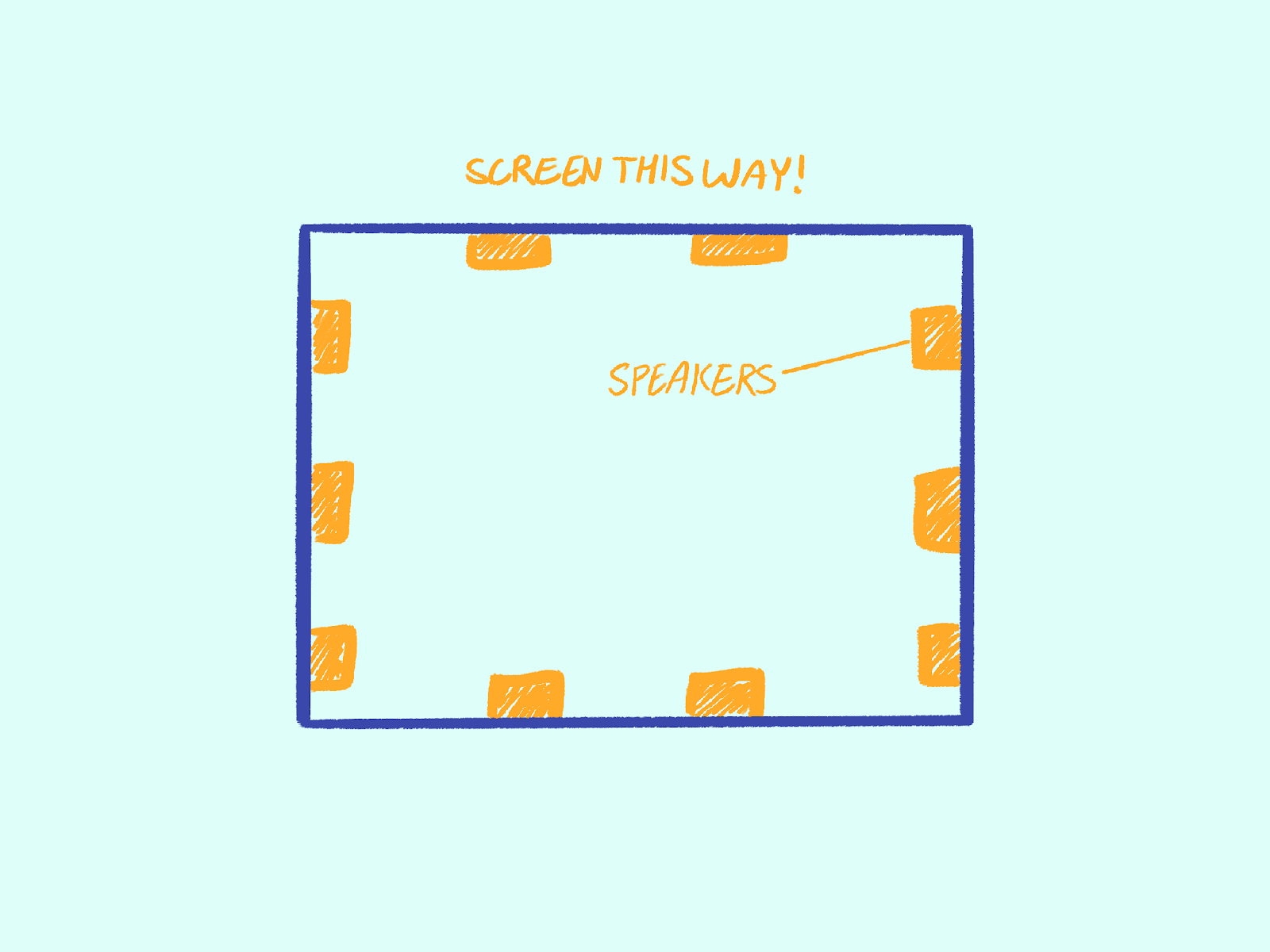
Before Dolby Atmos, when the cow is in front, the front speakers will sound. Similarly, lowing will be heard in the left and back speakers when the cow is in those respective directions. However, all the speakers facing the same direction will sound at once. This means regardless of whether the cow is in the front-left or back-left, all the left speakers will play the bellows of the cow at the same volume. Like so:
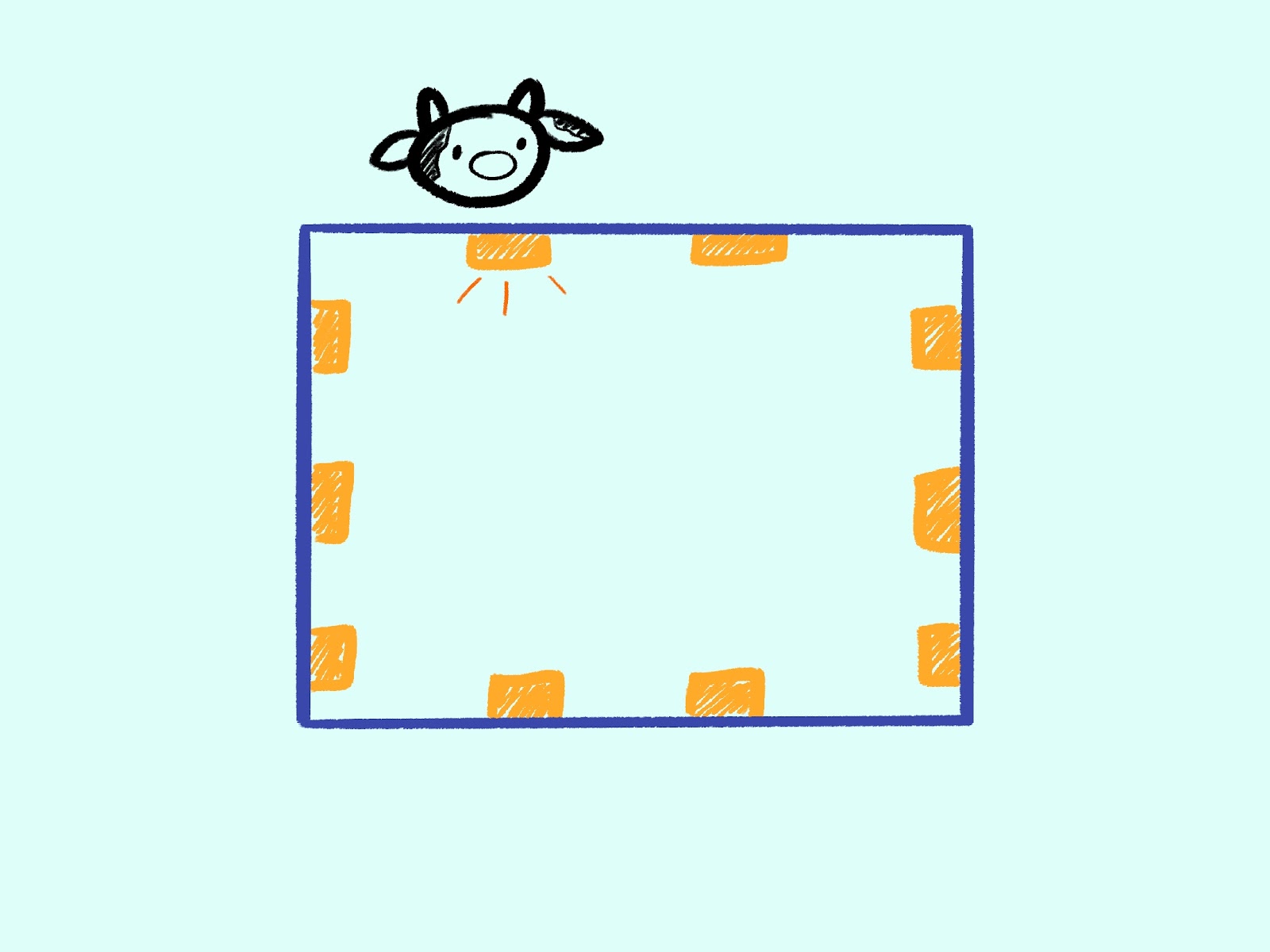
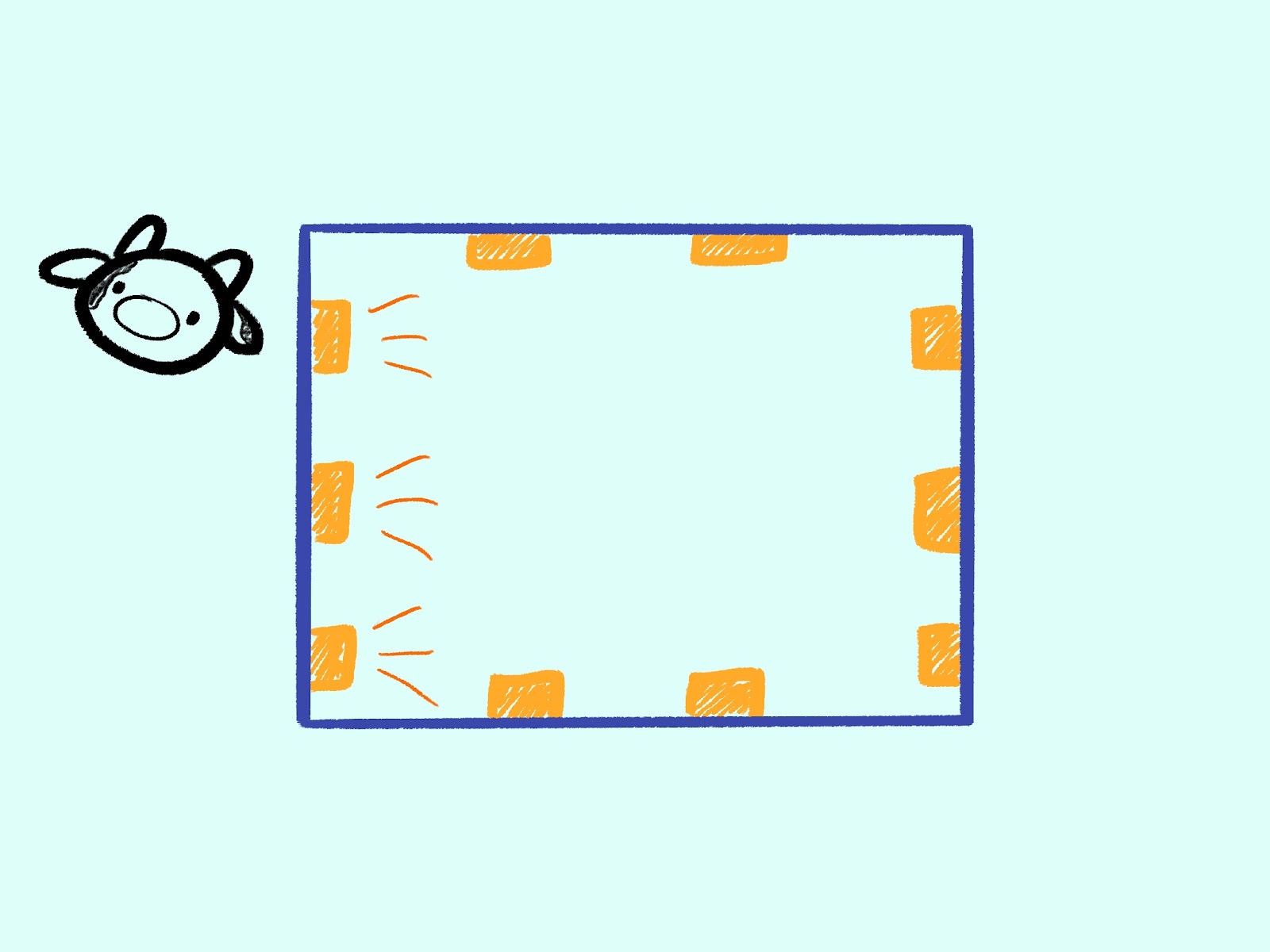
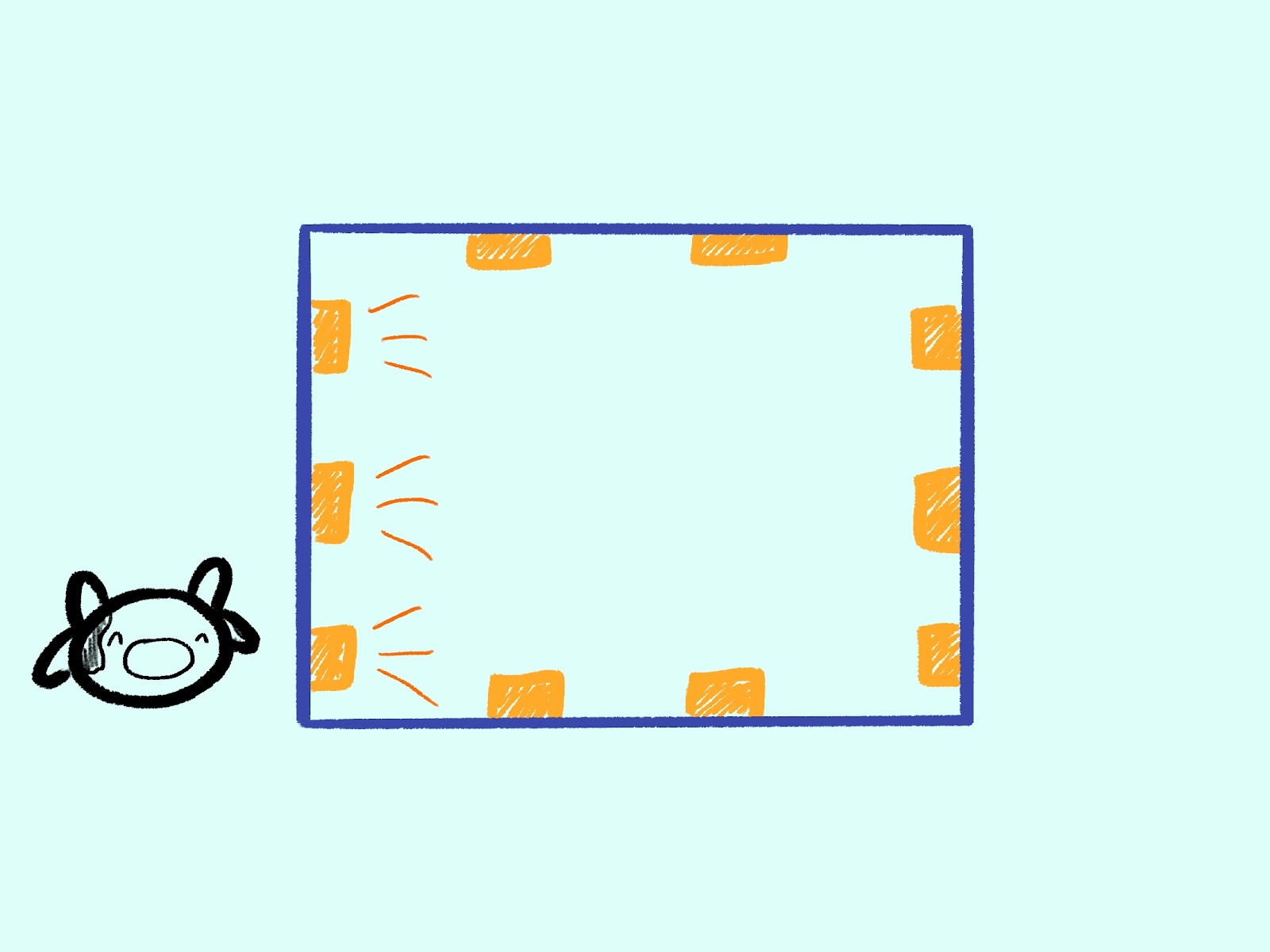
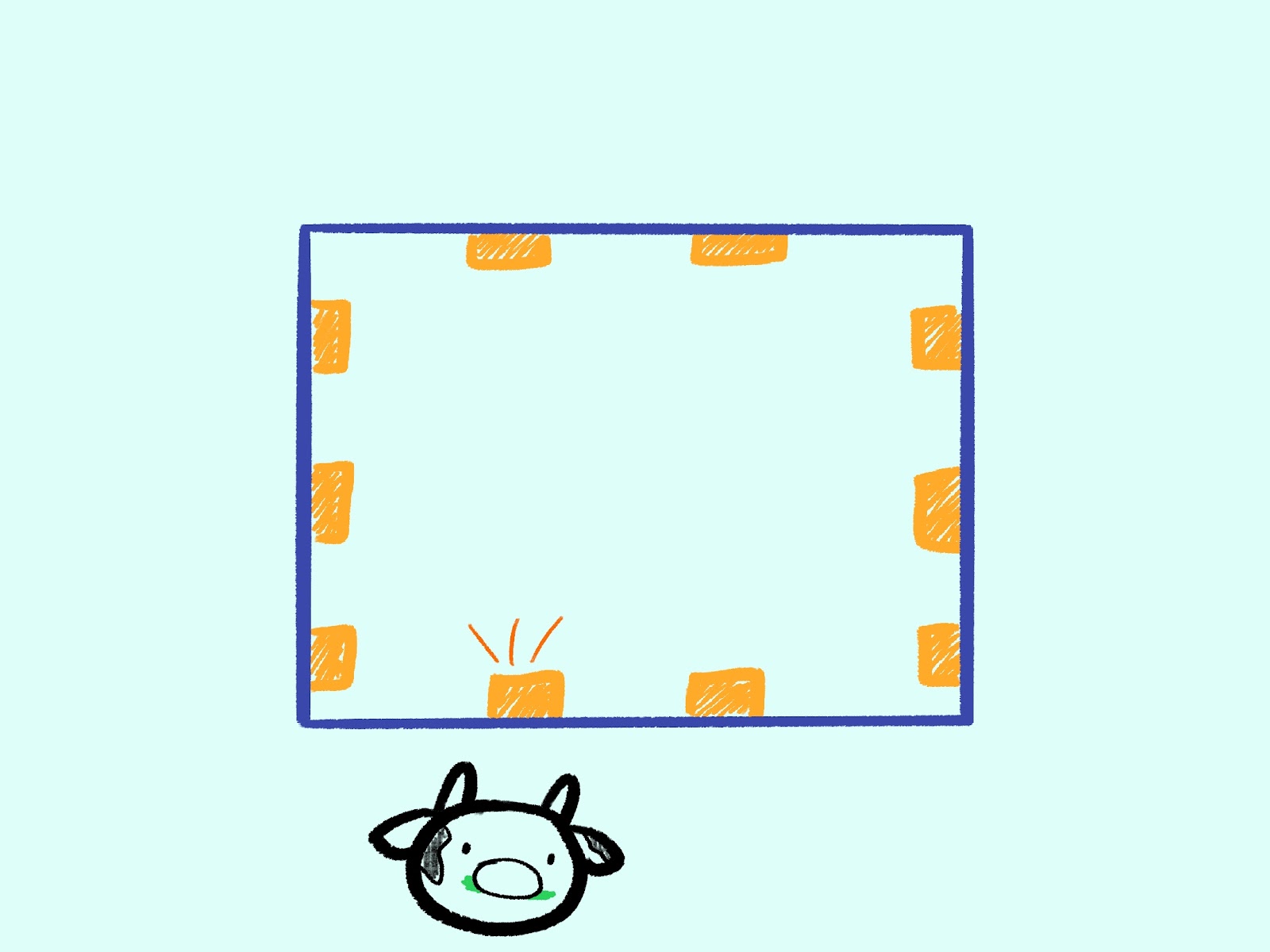
Old surround sound, simplified
Photo credit: Yours truly :)
If you were to close your eyes in the middle of such a scene, you would not be able to accurately discern the location of the cow.
On the other hand, Dolby Atmos utilises object-based surround sound, where different speakers play at different volumes depending on the location of the cow. Cow is in the front-left? The front-left speakers will be louder than those in the back-left. This allows for greater specificity, enabling viewers to better pinpoint where an object is, despite being nothing more than a cluster of pixels on a flat screen.
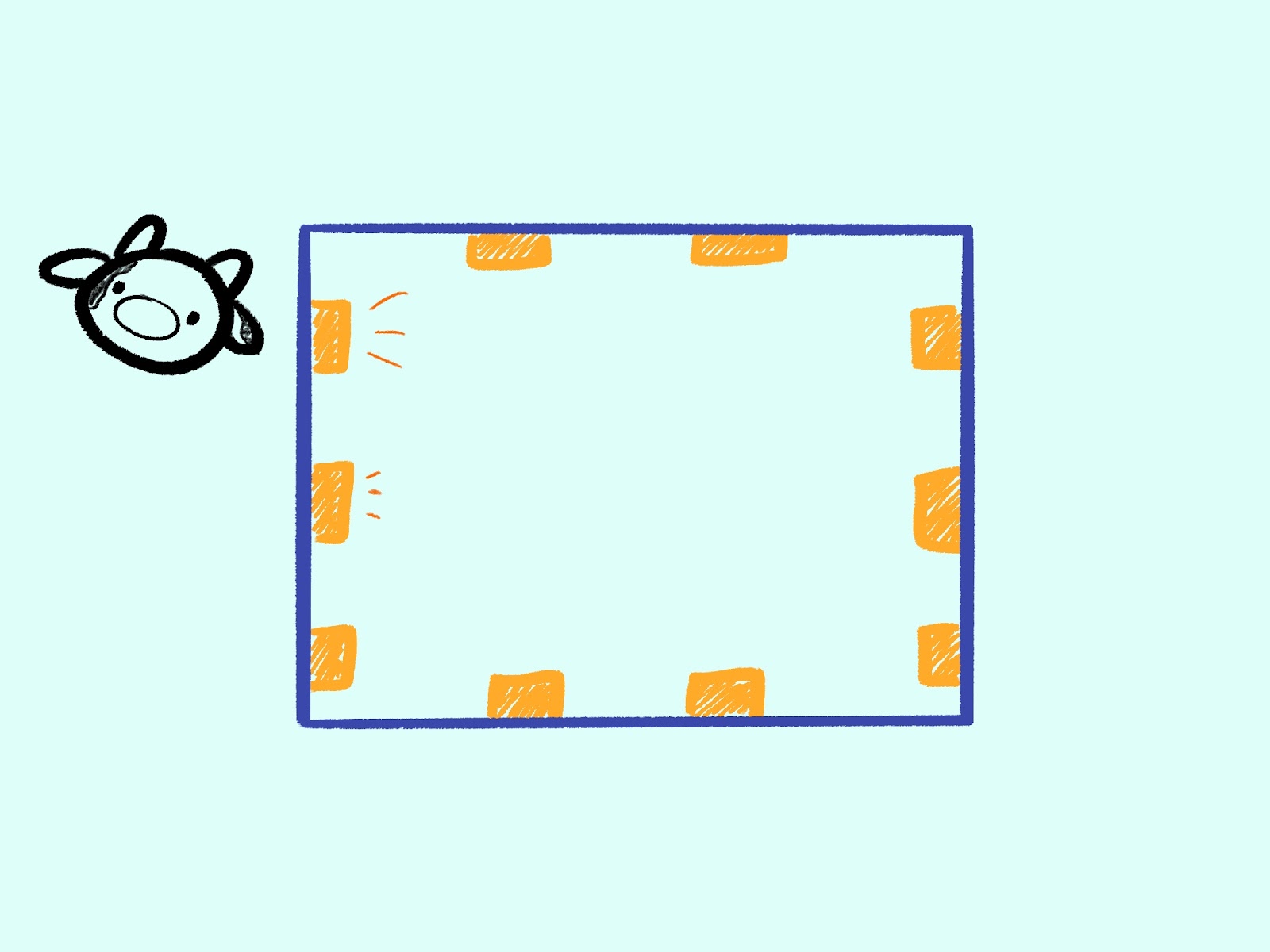
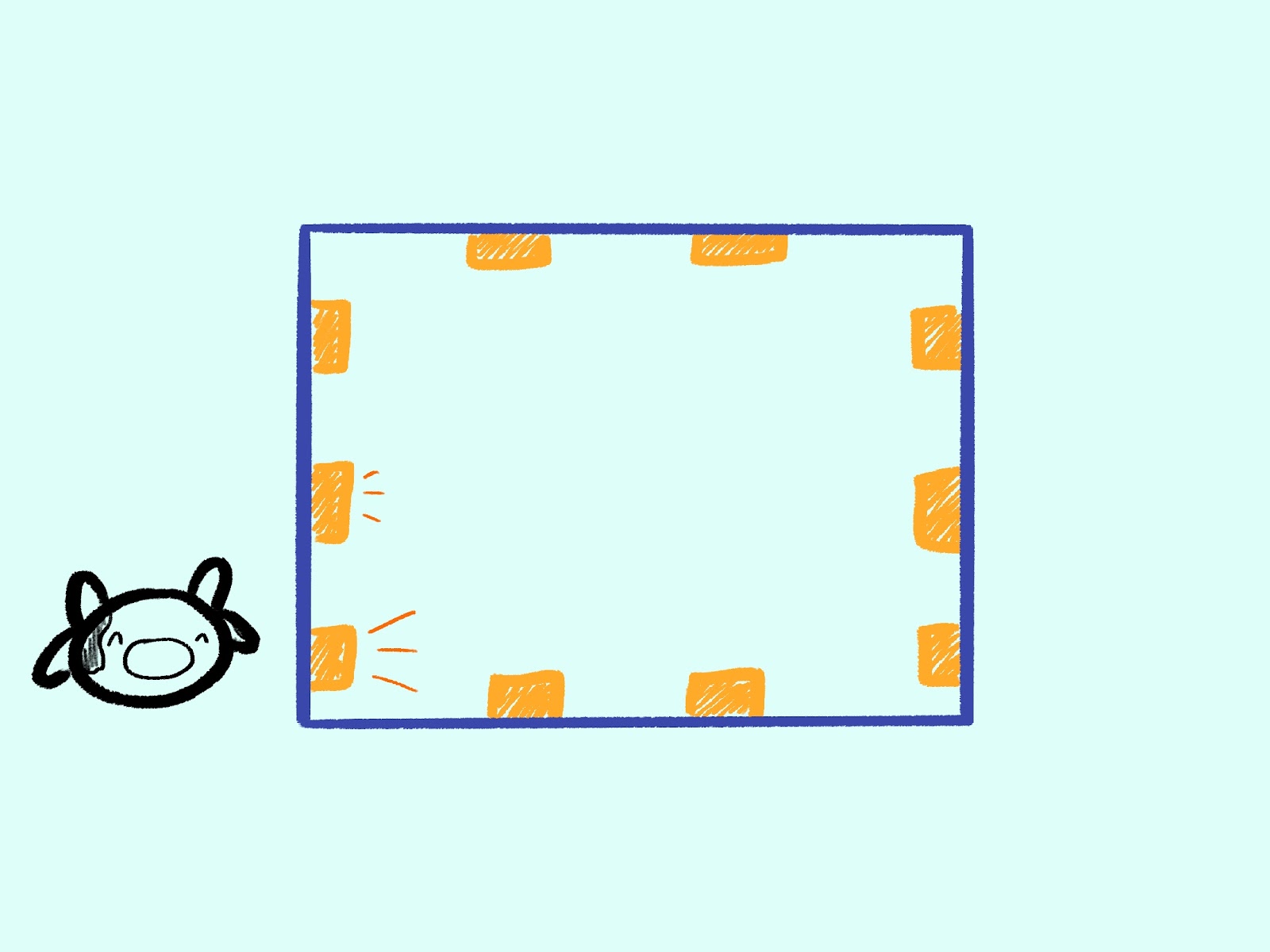
Dolby Atmos, simplified
Photo credit: Yours truly :)
Through such a mechanism, films and games have been able to drop us in the middle of battlegrounds, fantasy landscapes, and cyberpunk cities alongside their characters.
Sound Effects
As immersive an experience as surround sound gives us, what about the actual sounds that bring the picturesque scenes to life? The answer is “sound effects”!
Firstly, ambient sounds. These are meant to build settings through additions like the ceaseless chatter in a crowded coffee shop or even the howling wind blowing through the corridors of a dilapidated building. These sounds can usually be taken from a preexisting library, with just a few tweaks to match the director’s vision.
Such liberties cannot be taken for objects and movements however, instead requiring more specific instruments, tools and techniques to create. Behind these are foley artists, who draw upon various resources to tailor sounds for different scenes in different works. Though they have roles in live-action and animated works, animation grants them more creative freedom. Older works generally relied more on instruments; the slide whistles for a falling iron, or cymbals for the impact between said iron and its unfortunate victim below.
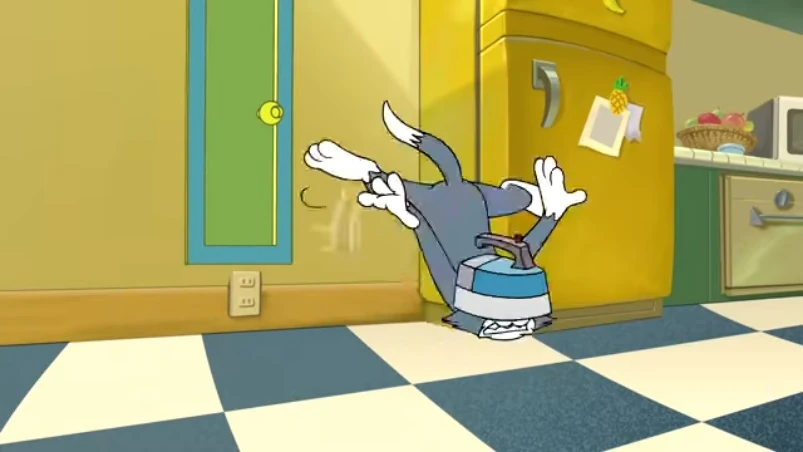
We can hear this picture
Photo credit: Tom and Jerry: Blast Off To Mars
As the profession evolved and new concepts emerged, foley artists have adapted to come up with new methods that are as unconventional as they are effective, all while keeping expenses low. Researching for this article, I came across an incredibly bizarre method, one that has contributed to almost every episode of the series it stars in.
For a fantasy creature like Appa, the signature flying bison of “Avatar: The Last Airbender”, there is no living thing in the real world that would make a suitable sound for his movements (that can fit in a recording studio). The sound had to be heavy, yet somehow fluffy. So did they throw around a massive stuffed toy with Appa’s likeness and proportions? Of course not. Instead their weapon of choice was a duct taped plunger, stuffed with paper napkins. The napkins gave the sound more “substance” and conveyed weight instead of the hollowness that the dome of a plunger head would otherwise make. The edges of the plunger were duct taped to soften the impact of the plunger against the board it hit, muting the sound to fit the furry behemoth that is Appa.
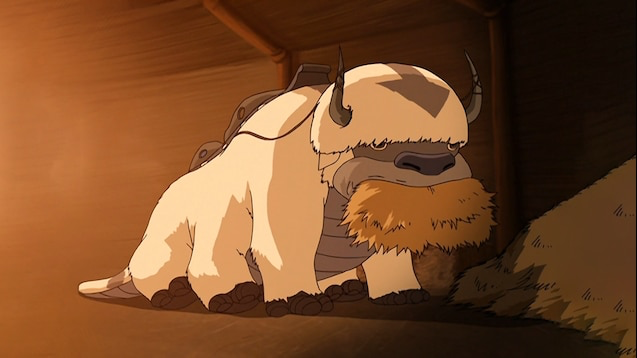
Appa
Photo credit: Avatar: The Last Airbender
On some occasions, the subjects have near silent real life counterparts. To fill this void in the audio, studios may opt to take artistic liberties and utilise sounds that could be associated with the object. This would require much analysis into the objects’ characteristics such as texture, material and mass. Take Mr Krabs for example. Crabs do not make much sound when they scurry about. If they were to commit to this in the show, there would be something missing when Mr Krabs is hurrying about. As such, foley artists had to fill up this space with a sound that could seem related to Mr Krabs. And so, with a crab’s shell as the basis (hard and light), we were given Mr Krab’s signature clave-like scurry.

Spare-rib bones for Mr Krabs?
Photo credit: Business Insider
Voice Acting
The stars of the show, whose faces are often hidden in a recording booth and unfamiliar to most of the public. Unless you are someone who actively looks up voice actors and their roles across various series, the work of voice actors often goes unappreciated. Despite this, they have brought numerous characters to life with nothing but their voice, with some going so far as to damage their vocal chords in the process. Depending on the series, the focus of voice actors will vary. For shows directed towards children, unique voices and mannerisms are the focus. As these characters are generally simpler, they would have to lean more on superficial characteristics to stand out in the sea of countless other children’s shows. Think of the Mickey Mouse gang or even Pingu. Most of the Pingu characters were actually voiced by one man, Carlo Bonomi. To make each character distinct, he varied his tone and speech patterns. Even then, he was able to convey a whole host of emotions, entertaining an entire generation of children.

Their unintelligible speech is all one man’s voice
Photo credit: Pingu
More mature shows have characters with more depth as they must fit into the greater narratives of their stories. Some voice actors are recognisable across shows, yet their characters feel completely different. This is because they, much like live-actors, study their characters before shooting. Understanding the subtleties in their personalities goes a long way in helping voice actors immerse themselves in their role, making all the difference between a protagonist fighting for vengeance and one fighting for fun. A comedic relief could have the same voice as a cunning villain, yet both performances would be entirely convincing. A perfect example would be Zenitsu from “Kimetsu no Yaiba” and Dabi from “Boku no Hero Academia”, a cowardly main character and an aloof pyromaniac villain respectively.
(Disclaimer: their characters have been heavily simplified for the sake of contrasting them. Sorry fans.)


Designs of Agatsuma Zenitsu (left) and Dabi (right)
Photo credit: Kimetsu no Yaiba; Boku no Hero Academia
Some find that voice acting is too exaggerated and unrealistic. As it should be. Animation is often made to exaggerate, sometimes for comedic effect, which “over-the-top” voice acting serves well. But even emotional scenes can be enhanced by exaggerated voice acting. As humans, we are wired to recognise body language and facial expressions. A slight adjustment in how we balance our weight, a twitch of a facial muscle; these are minuscule changes, yet our brains can interpret the vastly different messages they convey. However, many shows and games still have difficulty animating these minute changes. Thus, to bring out the complex emotions of these characters, voice acting is what carries them to the viewers. When done right, scenes can turn out to be phenomenally heart-wrenching or downright chilling.
Finale
I have barely scratched the surface of this topic. There is still so much more that goes on in the background of all our games and animated shows. There are still the composers who conjure up some of the most iconic soundtracks we know, along with the editors in charge of mixing, making sure volumes are just right to hear the characters as the music swells. And this is only for sound! Writing and animating is a lot more complicated than most people realise at first glance, going through several stages and people during production, from conceptualising to adapting it into a screenplay. Even storyboarding and animating can be split between several animators for backgrounds, characters, and special effects.
With all the work they put into these projects, it is a pity that they are so often overlooked and flooded with unreasonable demands. Let's show them the respect they deserve.
Bibliography
Bizofan. (2023, January 20). The power of animation sound effects. Business of Animation. https://businessofanimation.com/the-power-of-animation-sound-effects/
A brief history of surround sound. KEF US. (2021, March 30). https://us.kef.com/blogs/news/a-brief-history-of-surround-sound#:~:text=1941%3A%20Fantasia%20is%20released%20by,multiple%2Dmicrophone%20recording%20system).
Burns, V., & Sobolewski-Kiwerski, A. (2024, February 28). Does Dolby Atmos actually sound any better? here’s what it can do. Pocket. https://www.pocket-lint.com/what-is-dolby-atmos/#:~:text=Dolby%20Atmos%20is%20a%20redefinition,ability%20to%20dynamically%20move%20around.
Chen, L. (n.d.). Voice acting, another form of the performing arts. The Science Survey. https://thesciencesurvey.com/arts-entertainment/2021/06/11/voice-acting-another-form-of-the-performing-arts/
Digital Trends. (2021, September 17). What is Dolby Atmos? everything you need to know. YouTube. https://www.youtube.com/watch?v=XfSj4wIcLIY
Geaghan-Breiner, M., & Desiderio, K. (2022, August 20). How cartoon sounds are made for movies and TV shows. Business Insider. https://www.businessinsider.com/cartoon-sounds-foley-artiats-creating-animation-sound-animated-movies-tv-2022-8#:~:text=Narrator%3A%20This%20combination%20of%20Foley,individually%20and%20often%20layered%20together.
Hamer, A. (2024, May 3). What is sound design? elements & practices of sound design. Descript. https://www.descript.com/blog/article/what-is-sound-design-elements-practices-of-sound-design#:~:text=Today%2C%20most%20sound%20designers%20use,gun%2C%20or%20a%20revving%20motorcycle


Comments